
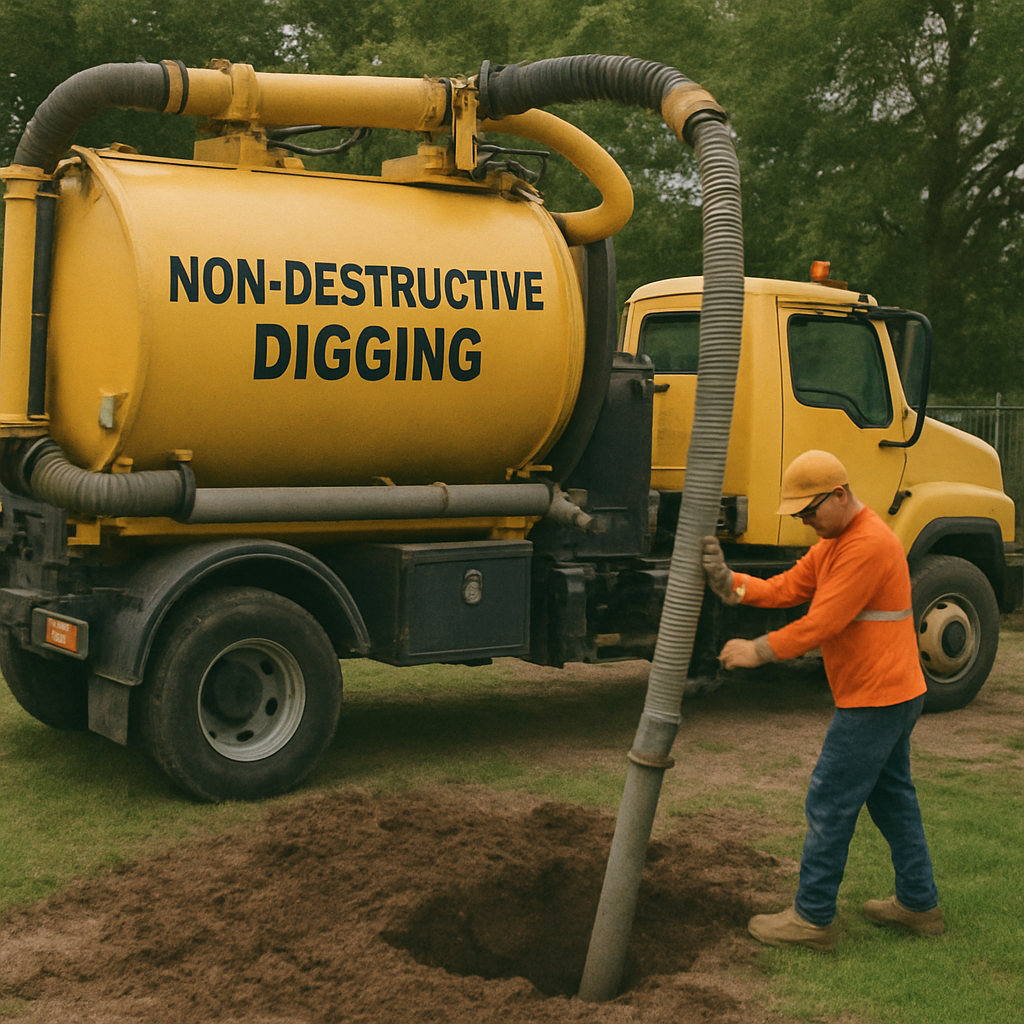
When it comes to excavation, safety and precision are paramount. Traditional digging methods often involve heavy machinery and can pose risks to underground utilities and the environment. Enter non-destructive digging, a technique that offers a safer and more efficient alternative for various excavation projects.
Non-destructive digging, often referred to as NDD, is a method that involves removing soil using a combination of high-pressure water and a vacuum system. This technique is designed to expose underground utilities without causing damage. It’s a preferred method in areas where precision is required, or where traditional digging could disrupt essential services.
How Does Non-Destructive Digging Work?
The process begins with high-pressure water jets that break up the soil. The loosened soil is then sucked up by a powerful vacuum and stored in a debris tank for safe disposal. This method allows for precise excavation without the risk of cutting or damaging underground utilities like gas lines, water pipes, and electrical cables.
Benefits of Non-Destructive Digging
- Safety: By avoiding the use of heavy machinery, NDD significantly reduces the risk of accidents and damage to underground utilities.
- Precision: The method allows for accurate excavation, which is critical in urban areas where underground infrastructure is dense.
- Environmental Impact: Non-destructive digging is less invasive and reduces the risk of environmental contamination.
- Cost-Effectiveness: By minimizing damage and the need for repairs, NDD can be more economical in the long run.
Ground Penetrating Radar: Enhancing Precision
Ground penetrating radar (GPR) is often used alongside non-destructive digging to enhance precision. GPR technology uses radar pulses to image the subsurface, allowing operators to identify the location and depth of underground utilities before excavation begins.
Advantages of Using Ground Penetrating Radar
- Accuracy: GPR provides detailed images of the subsurface, ensuring that all utilities are accounted for before any digging starts.
- Speed: The technology allows for quick scanning, reducing project timelines.
- Versatility: GPR can detect a wide range of materials, from metal pipes to plastic conduits.
Applications of Non-Destructive Digging
Non-destructive digging is versatile and can be used in various applications, including:
Utility Location and Mapping
Before any construction or excavation project, it’s crucial to know what’s beneath the surface. NDD, combined with GPR, ensures accurate mapping and location of utilities, preventing accidental damage.
Potholing
Potholing is a technique used to confirm the location of underground utilities. Non-destructive digging is ideal for potholing as it exposes utilities without causing harm, allowing for visual confirmation.
Trenching
For projects requiring trenching, such as laying new pipelines or cables, NDD provides a clean and precise method to create trenches without disturbing nearby utilities.
Environmental and Archaeological Investigations
Non-destructive excavation methods are invaluable in sensitive areas where traditional digging could cause significant disruption, such as archaeological sites or areas with fragile ecosystems.
Non-Destructive Digging in Sydney
Sydney, with its bustling urban environment and complex underground infrastructure, is an ideal location for non-destructive digging. The city’s commitment to safety and efficiency in construction projects makes NDD a preferred choice for many contractors and utility companies.
Choosing the Right Service Provider
When selecting a non-destructive digging service in Sydney, consider the following:
- Experience: Look for providers with a proven track record in the industry.
- Technology: Ensure they use the latest equipment and techniques, such as ground penetrating radar, for optimal results.
- Safety Standards: The provider should adhere to strict safety standards to protect both workers and the surrounding environment.
The Future of Excavation
As urban areas continue to grow and the demand for infrastructure increases, non-destructive digging and technologies like ground penetrating radar will play a pivotal role in ensuring that projects are completed safely, efficiently, and with minimal environmental impact.
Innovation in Non-Destructive Digging
The field of non-destructive excavation is constantly evolving. Advances in technology are making the process even more precise and efficient. As these methods become more widely adopted, they set a new standard for safety and sustainability in the construction and utilities industries.
Conclusion
Non-destructive digging offers a safer, more efficient alternative to traditional excavation methods. By utilizing techniques like high-pressure water jets and ground penetrating radar, projects can be completed with greater precision and less risk to underground utilities and the environment.
For cities like Sydney, where underground infrastructure is complex and densely packed, non-destructive excavation is not just an option but a necessity. As the industry continues to innovate, non-destructive digging will likely become the standard practice, paving the way for safer and more sustainable urban development.
By understanding and implementing non-destructive digging techniques, contractors and utility companies can ensure that their projects are completed on time, within budget, and without unnecessary risk. This commitment to safety and efficiency not only benefits the immediate project but also contributes to the long-term sustainability of urban environments.


Leave a Reply