
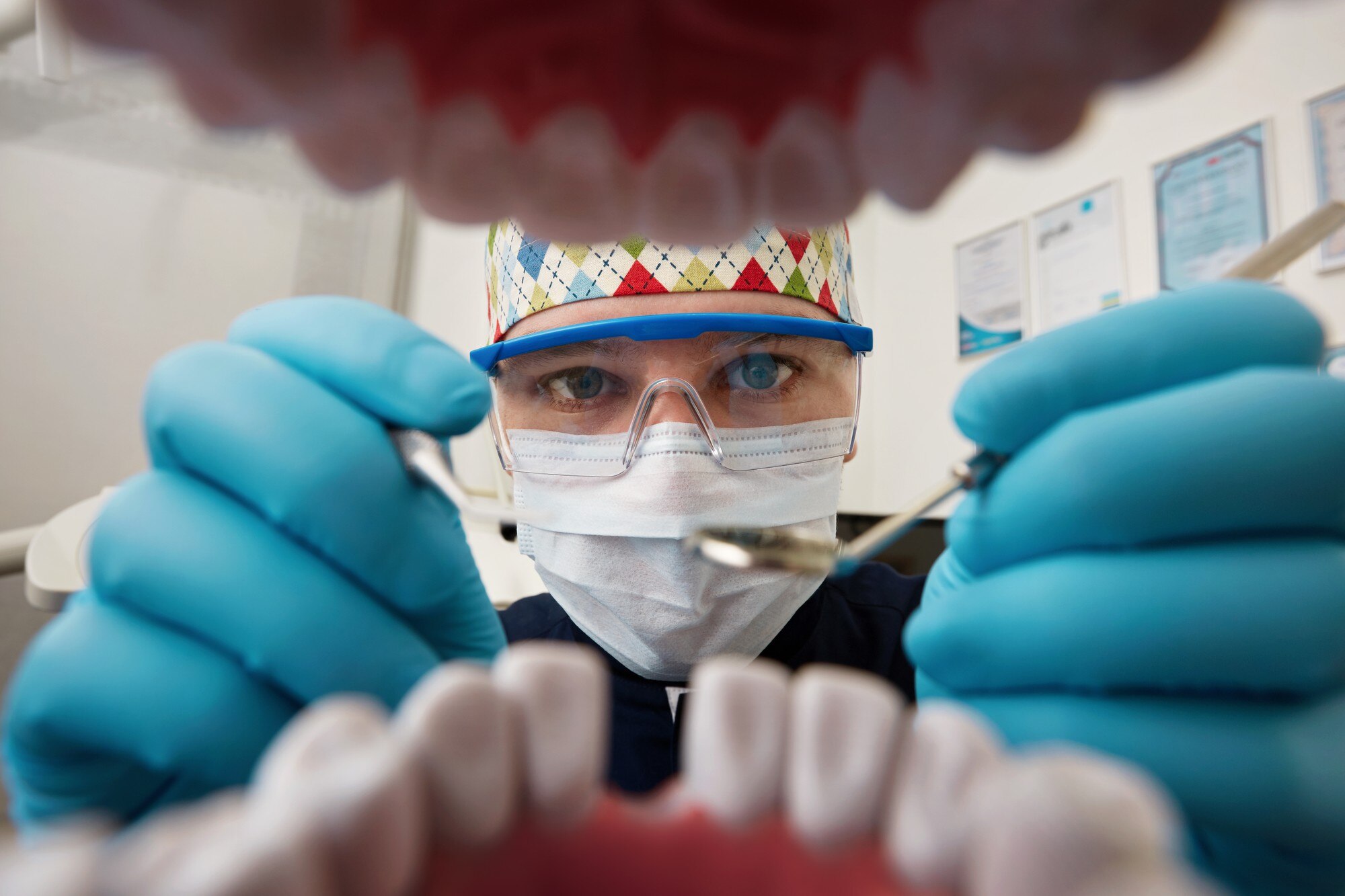
What You Should Know About Dental Bridges
Lose a tooth and you lose more than a bit of your smile. The gap starts doing quiet damage. Your other teeth drift toward the space, your bite shifts, chewing on that side gets annoying, and the jawbone underneath the old tooth slowly thins out because nothing’s stimulating it anymore. None of that happens overnight, but it does happen.
A bridge is one of the oldest fixes we’ve got for this, and it still holds up. The idea is simple enough: you’ve got a gap, so you fill it with a false tooth, and you hold that false tooth in place using whatever’s sitting on either side of the gap. Usually that’s your own teeth. Sometimes it’s implants. Either way, the result is a tooth that sits where the missing one used to, so you can bite and chew and talk without thinking about it.
Where it gets more interesting is that there’s no single “bridge.” There are four main types, and they’re genuinely different from one another. The right one for you comes down to what your remaining teeth are like, how your gums and jawbone are doing, how much you’re willing to spend, and where in your mouth the gap actually is. A missing front tooth and a missing back molar are not the same problem.
Here’s how the four break down.
Dental Bridge Cost Estimator
Estimate the potential cost of a dental bridge using editable Australian price assumptions. Your result is an estimate only and is not a dental quote.
| Cost component | Estimate |
|---|---|
| Bridge units | 3 |
| Bridge type | Traditional fixed bridge |
| Bridge fee range | $0 – $0 |
| Additional treatment and other costs | $0 |
| Estimated total before rebate | $0 |
| Expected insurance rebate | $0 |
| Estimated out-of-pocket cost | $0 |
Dental bridge options comparison
| Dental bridge type | How it works | Usually used for | Tooth preparation | Implant surgery |
|---|---|---|---|---|
| Traditional bridge | False tooth is supported by crowns on neighbouring teeth | One or more missing teeth | Usually significant | No |
| Maryland bridge | False tooth is bonded to the back of neighbouring teeth | Often front teeth | Minimal | No |
| Cantilever bridge | False tooth is supported from one side | Selected cases with only one suitable supporting tooth | Depends on design | No |
| Implant-supported bridge | Bridge is attached to dental implants | Several missing teeth | Adjacent teeth usually not used as supports | Yes |
| Temporary bridge | Short-term replacement while permanent treatment is completed | Temporary tooth replacement | Depends on treatment plan | Sometimes |
The traditional bridge
This is the one most people have in their head when they think "bridge." You've got a healthy tooth on each side of the gap. The dentist shaves those two teeth down a bit, pops crowns over them, and the false tooth hangs between the crowns like a link in a chain. The teeth doing the holding are called abutment teeth, if you ever hear your dentist use the word.
It's a solid, well-proven option. Done properly and looked after, a traditional bridge can last well over ten years, and in porcelain or ceramic it looks genuinely natural — most people won't pick which tooth isn't real.
The trade-off is the enamel. To fit those crowns, the dentist has to file down the two neighbouring teeth, and that enamel doesn't grow back. So if those teeth are perfectly healthy, you're altering good teeth to fix a gap somewhere else. And if they're already weak, heavily filled, or a bit dodgy, they might not make great anchors in the first place. Some people also notice the crowned teeth get a little more sensitive afterwards.
The cantilever bridge
A cantilever is basically a traditional bridge that only leans on one side. Instead of a healthy tooth on both sides, you've got just the one, so the false tooth is anchored to a single crowned tooth rather than slung between two.
You'd reach for this when there simply isn't a usable tooth on both sides of the gap, or in spots that don't cop much biting force — usually towards the front of the mouth. It's less work than a traditional bridge, since you're only preparing one tooth.
The catch is pretty obvious once you think about it. Everything the false tooth deals with — every bite, every bit of pressure — all funnels down onto that one supporting tooth. Over time that's a lot to ask. It can loosen or damage the anchor tooth, which is why you really don't want a cantilever anywhere near your back teeth, where the chewing forces are heaviest.
The Maryland bridge
The Maryland bridge is the gentle one. Rather than crowning the teeth either side, it uses a thin framework — metal or porcelain — with little "wings" that get bonded to the backs of the neighbouring teeth using dental resin. The false tooth sits in the gap, held by those bonded wings.
The big appeal: your natural teeth stay almost completely intact. There's barely any drilling, it's less invasive, it usually goes in faster, and it tends to cost less than the other options. That makes it a common choice for front teeth, for younger patients, and for anyone who's keen to preserve as much of their own tooth as possible.
It's not as tough, though. Because it's just bonded on, a Maryland bridge can come loose under pressure, which again rules it out for back teeth and anywhere that takes a heavy bite. And if metal wings are used, they can occasionally cast a faint greyness through thin or translucent teeth, which matters when we're talking about the front of your mouth.
The implant-supported bridge
This is the sturdy end of the scale, and it works on a completely different principle. Instead of borrowing support from your natural teeth, the bridge sits on dental implants — titanium posts placed surgically into the jawbone. The surrounding teeth are left entirely alone.
A few things make this one stand out. It's very strong and very stable, and with proper care it can last decades. It can replace several teeth in a row, not just one or two. It doesn't touch your healthy teeth at all. And because the implants sit in the bone and put load through it the way a real root would, they actually help slow down the bone loss that normally follows a missing tooth. It feels and functions close to the real thing.
What you're trading for all that is time, money, and a bit more involvement. It's the most expensive option up front. It involves surgery and a healing period that's measured in months, not weeks. And it hinges on having enough healthy bone to hold the implants. If the bone's thinned out too much, you may need a graft first, and some health conditions make the whole thing more complicated. This isn't a quick fix, but for the right person it's the closest thing to getting the tooth back.
So which one is right for you?
Honestly, that's not a question to answer from a blog. It depends on things only a proper exam can tell you.
A few of the factors that end up driving the decision:
- How many teeth you're missing, and where in the mouth they are
- The condition of the teeth and gums around the gap
- How much healthy jawbone you've got to work with
- How much the result's appearance matters to you — a front tooth is a different conversation to a back one
- Your budget, and what your private health cover will actually chip in
Your dentist will usually take X-rays or a 3D scan before saying much, because the parts that matter most — bone, roots, the health of the anchor teeth — aren't things you can judge by looking in the mirror. Two people with what seems like the same gap can end up with completely different recommendations.
One last thing worth saying: whichever bridge you go with, it only lasts as long as you look after it. Brush and floss properly, keep up your regular check-ups, and a good bridge will quietly do its job for years. Neglect it and even the best one won't reach its potential.
Thinking about a bridge in Melbourne?
If you're weighing up a dental bridge, the team at Lentini Dental can take a proper look and talk you through what actually makes sense for your mouth — not just the option that's easiest to sell. We've spent decades working in restorative and cosmetic dentistry, and we'd rather explain the reasoning behind a recommendation than hand you a one-size-fits-all answer.
Get in touch when you're ready to book an assessment, and we'll go from there.
Understanding the different types of dental bridges: which one is right for you?
📍 Visit us in Werribee or call (03) 9742 6928 to book your consultation.
🔗 Or book online at www.lentinidental.com.au
Let us help you smile with confidence again.
Click here to read more about what makes you a good candidate for a dental bridge: https://www.lentinidental.com.au/are-you-a-good-candidate-for-a-dental-bridge/


Leave a Reply