
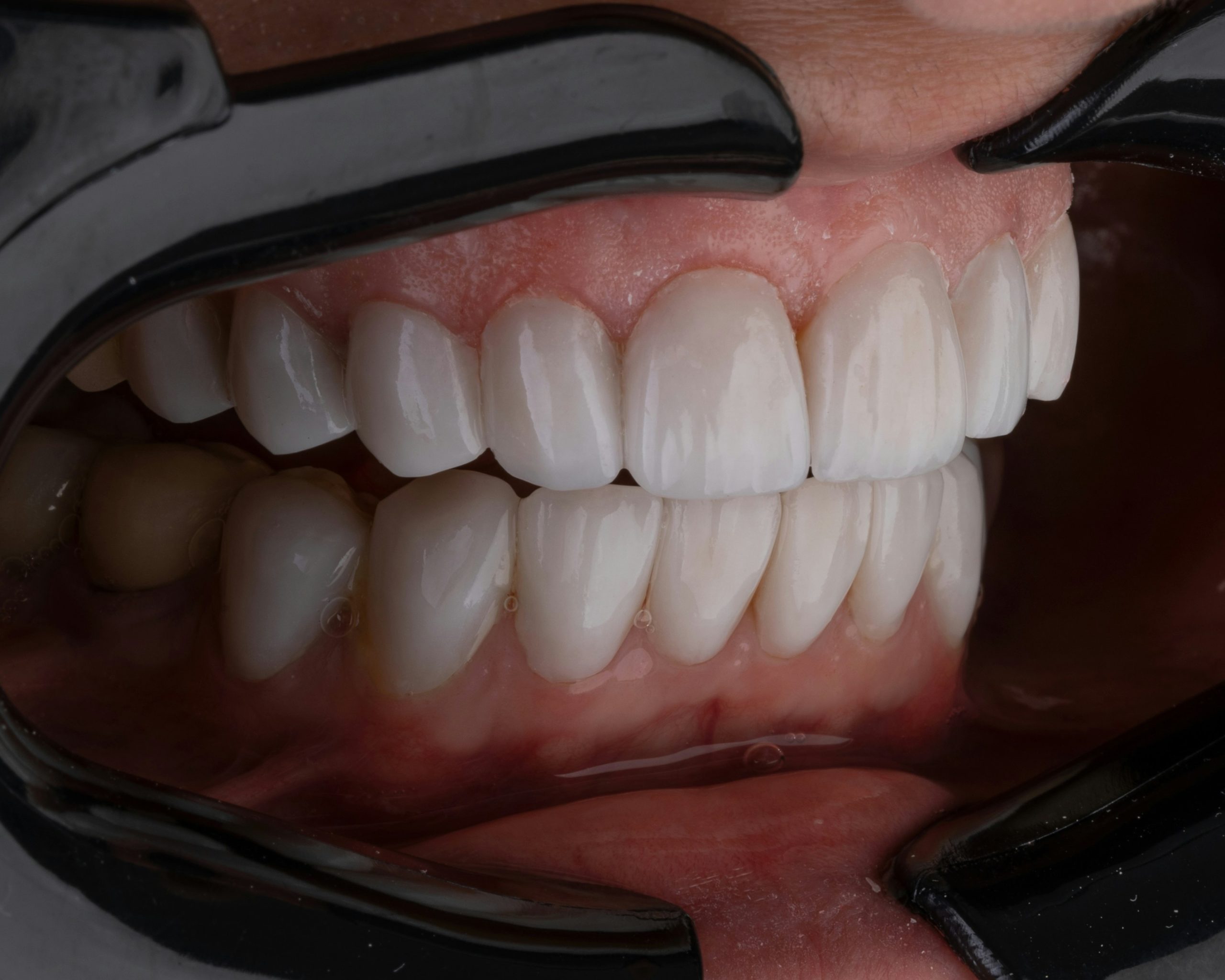
Funny thing about wisdom teeth — they turn up last and tend to cause the most fuss. Most people see them push through in their late teens or early twenties, well after the rest of the mouth has settled into place. By then there’s often simply no room left for them, and that’s where the trouble starts.
Let’s walk through what these teeth really are, why they so often become a problem, and what actually happens if one needs to come out. No scare stories, no wall of jargon — just a straight, honest look so you know where you stand.
Impacted wisdom teeth can result in pain, infection, and other complications. To prevent these issues, dentists often recommend wisdom tooth removal.
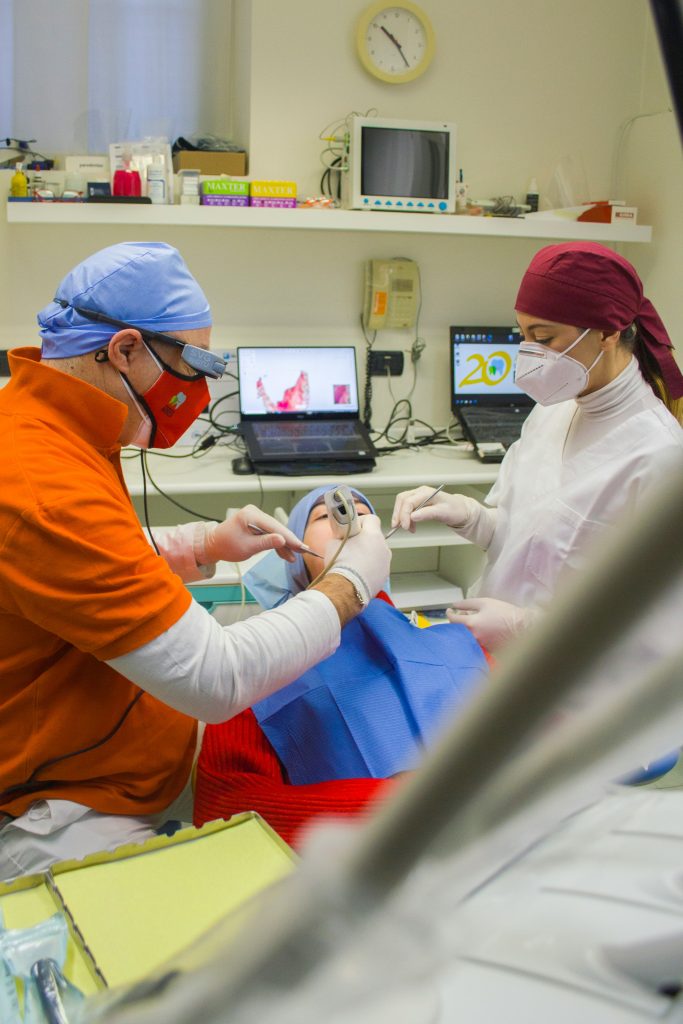
Wisdom Tooth Removal at a Glance
| Question | Quick answer |
|---|---|
| What are wisdom teeth? | The third adult molars, usually appearing around ages 18–25 |
| Does everyone have wisdom teeth? | No. Some people have fewer than four or none |
| Do all wisdom teeth need removal? | No. Healthy, problem-free wisdom teeth may simply be monitored |
| Why are wisdom teeth removed? | Common reasons include impaction, infection, decay, gum disease, cysts or damage to nearby teeth |
| Can an impacted wisdom tooth cause problems? | Yes. It can contribute to infection, pain, decay, gum problems and damage to neighbouring teeth |
| Who removes wisdom teeth? | A dentist, oral surgeon or oral and maxillofacial surgeon, depending on the case |
| Is anaesthesia required? | Local anaesthetic is commonly used. Sedation or general anaesthesia may be considered for some patients |
| How long is recovery? | Recovery varies. Many people return to normal activities within about a week, although the extraction site takes longer to heal |
| Are there risks? | Yes. Possible complications include bleeding, infection, swelling, dry socket, jaw stiffness and nerve-related numbness |
What wisdom teeth actually are
Wisdom teeth are your third molars, sitting right at the back corners of your mouth. Most people get four, one in each corner, though plenty have fewer — and some lucky folks never grow any at all. They’re a bit of a leftover, really. Our ancestors needed that extra grinding power for a tougher, chewier diet. These days our jaws are smaller and our food’s a lot softer, so that extra set of molars often arrives with nowhere sensible to sit.
And that’s the crux of it. Give a wisdom tooth enough room to come through cleanly in a good position, and it can be perfectly fine for life. But when the space isn’t there — which happens a lot — things start heading sideways.
Why they cause so much grief
The usual culprit is the impacted wisdom tooth. “Impacted” just means it can’t break fully through the gum, either because it’s jammed against the tooth in front or growing at an odd angle. Some lie almost flat, pushing sideways into the neighbouring molar. Others poke through only part way, leaving a flap of gum sitting over the top.
That half-erupted one is a proper nuisance. The gum flap traps food and bacteria, and no matter how careful you are with the toothbrush, you’ll struggle to keep it clean. What you often end up with is a recurring infection called pericoronitis — swollen, sore, sometimes a bad taste, sometimes trouble opening your mouth. It calms down, then flares up again a few weeks or months later. People put up with that cycle far longer than they should.
Then there’s decay. A wisdom tooth wedged against its neighbour creates a tight, hidden gap your brush and floss can’t reach. Decay creeps in on both teeth, and suddenly the problem tooth has dragged a perfectly healthy one down with it. Crowding gets mentioned too, though that one’s more argued over — pressure from wisdom teeth can play a part in shifting, especially if you’ve put in the hard yards for straight teeth. And then the plainest reason of all: pain. Sometimes a wisdom tooth just aches, and that ache is your mouth telling you something’s off.
Gum disease around the back molars, cysts forming around a tooth that never erupted, damage to the roots next door — it adds up. None of it looks dramatic on day one. It builds slowly and quietly, which is exactly why so many people leave it too long.
Not every wisdom tooth has to go
Worth saying clearly, because there’s a stubborn myth that every wisdom tooth is bound for the bin. Not true. Plenty of people keep theirs right into old age without a hint of bother. If a wisdom tooth has come through properly, sits in a healthy spot, and you can clean it like any other tooth, there’s often no reason to touch it.
The call always comes down to the specifics — your symptoms, where the tooth sits, the general state of your mouth, and what the imaging shows. An X-ray, usually a panoramic OPG, tells your dentist what’s going on under the gum: the angle of the tooth, how close it sits to the nerve, whether the roots are straight or curled, and whether something’s brewing that you can’t yet feel. You really can’t judge a wisdom tooth from what you see in the mirror.
Sometimes the honest answer is “let’s keep an eye on it.” A quiet, clean tooth might just get reviewed over time rather than pulled. The other side of that coin is the tooth that keeps flaring up — once that pattern sets in, waiting rarely does you any favours. It tends to get worse, and removal is usually easier done before things get complicated.
What the process actually involves
Let’s take the mystery out of this, because the dread is nearly always worse than the day itself.
It starts with a consultation. Your dentist has a look, talks through your symptoms, and takes that X-ray. From there they can tell you whether it’s a simple job or something more involved, and whether a general dentist can handle it or you’re better off with an oral surgeon. The trickier cases — deeply impacted teeth, roots sitting close to the nerve — are often best left to a specialist, and a good dentist will say so rather than press on regardless.
Extractions fall roughly into two groups. A simple extraction is for a tooth that’s come through normally with decent access — it’s loosened and lifted out, usually under local anaesthetic, and it can be over quicker than you’d expect. A surgical extraction comes into play when the tooth is impacted or hasn’t fully erupted. That might mean a small cut in the gum, sometimes removing a little bone, now and then sectioning the tooth into pieces to ease it out. Sounds confronting, I know, but it’s routine work, and you won’t feel pain while it’s happening — just pressure and a bit of movement.
On the comfort side, local anaesthetic is the standard and handles most extractions well. For more complex cases, for several teeth at once, or simply for anxious patients, sedation’s on the table — anything from light sedation that takes the edge off, right up to going fully under for the toughest surgical jobs. Have an honest chat about this at the consultation. If the idea of being awake worries you, say so. There’s no medal for gritting your teeth through it.
Recovery: manageable, but don’t shrug it off
People tend to swing to one of two extremes here. Some brace for a week flat on their back; others reckon they’ll stroll into work the next morning. The reality sits somewhere in the middle.
The first two or three days are usually the worst of it. Expect some swelling — it often looks worse on day two or three than it did straight afterwards — along with soreness and a jaw that’s a bit stiff to open. A simple extraction might settle within a few days. A surgical one, especially with several teeth out at once, can take a week or more before you feel properly like yourself. None of that’s cause for panic, but it’s not nothing either, so plan around it.
Take the first day or two genuinely easy. Rest up, keep your head slightly raised, and use an ice pack on the cheek in those early hours to keep the swelling down. Stick to soft, cool foods — soups, yoghurt, mashed potato, scrambled eggs — and ease back to normal as things settle. Steer clear of very hot food and drink early on, and resist the urge to poke at the site.
A few things really do matter. Don’t rinse hard, spit, or use straws for the first day or so — that suction can dislodge the blood clot forming in the socket. Lose that clot and you’re at risk of a dry socket, a genuinely rotten delayed pain that shows up a few days later and means a trip back to the dentist. And if you smoke, now’s the time to pause, because smoking is one of the biggest reasons healing goes pear-shaped. From day two, gentle warm salt-water rinses help keep things clean. Take any pain relief or antibiotics exactly as prescribed, and keep brushing the rest of your teeth as normal, just working carefully around the healing area.
Most people are honestly surprised by how smoothly it goes when they follow the aftercare. The ones who have a hard time are usually those who did too much, too soon.
When it’s worth seeing your dentist
So how do you know when to stop putting it off? Recurring pain or swelling at the back of your mouth, a bad taste that keeps coming back, tenderness in the gum behind your last molar, or finding it harder to open wide or chew on one side — those are all your mouth waving a little flag. A half-erupted wisdom tooth that keeps flaring up is unlikely to quietly sort itself out.
And even if nothing hurts, bring it up at your regular check-up, especially through your late teens and twenties. An X-ray can catch a problem forming long before you’d ever feel it, and that early look hands you options instead of emergencies.
Here’s the real takeaway: wisdom teeth aren’t worth panicking over, but they’re not worth ignoring either. Some sit quietly for a lifetime. Others turn into a recurring nuisance that only gets harder to deal with the longer it’s left. If yours have been grumbling at you, don’t wait for them to start shouting. A quick chat and an X-ray will tell you exactly where things stand — and that’s almost always an easier road than the one taken by the people who waited too long.



Leave a Reply