
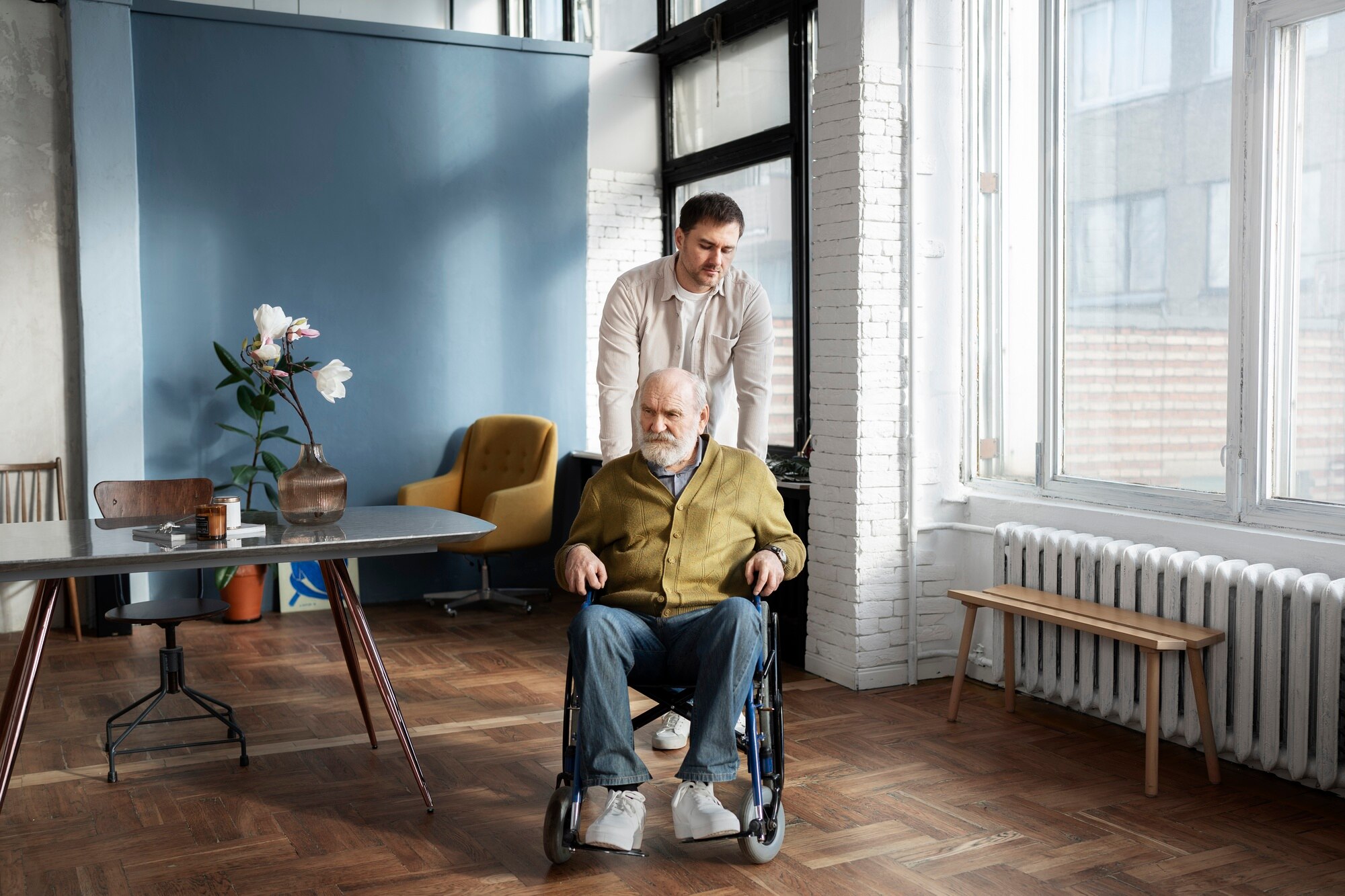
TL;DR: In-home nursing means a qualified nurse comes to you — at your place, on your terms. For people with disability in Toowoomba and Warwick, it can mean fewer hospital trips, better-managed health needs, and a life that feels a little more like yours again.
Let’s be honest — figuring out nursing support at home can be exhausting. You’re already dealing with so much. The last thing you need is to spend hours on hold, chase down referrals, or try to work out whether the care you need even exists locally.
Maybe you’ve been changing wound dressings yourself because you couldn’t find anyone available nearby. Maybe your family has been managing medications or tube feeds on top of full-time jobs and everything else. Or maybe you’re brand new to the NDIS and the whole thing feels like learning a foreign language while someone keeps moving the goalposts.
You’re not alone in that. In Toowoomba and Warwick — like a lot of regional Queensland — the gap between what people need and what’s easy to access can feel pretty wide. Services exist, but finding the right ones takes time, energy, and a fair bit of persistence.
That’s what this guide is for. We’ll walk you through what in-home nursing actually looks like, who it’s right for, how it fits into your NDIS plan, and what to keep in mind when choosing a provider. We’ve also included a few fictional scenarios to bring it all to life — they’re labelled clearly, so you always know what’s real and what’s illustrative.
So, What Actually Is In-Home Nursing?
Simply put, it’s when a registered or enrolled nurse comes to your home to provide clinical care — instead of you having to go to a hospital or clinic. You might also hear it called “community nursing” or “nursing in the home.”
It covers a wide range of health-related tasks, including:
- Wound care and dressings — looking after surgical wounds, pressure injuries, leg ulcers, or other skin concerns
- Medication management — giving medications, setting up Webster packs, or sorting out complex medication routines
- Catheter and continence support — managing catheters, bowel care, and continence aids
- Chronic disease monitoring — keeping an eye on blood pressure, blood glucose, oxygen levels, and other vital signs
- Post-hospital care — helping you recover safely at home after surgery or a hospital stay
- Nutritional support — managing enteral feeds or PEG tubes
- Palliative care — gentle, comfort-focused support for people with life-limiting conditions
And here’s something worth saying clearly: in-home nursing isn’t just for older people. It’s for anyone — at any age — who has health needs that require proper clinical care. If you’ve been quietly managing things that really should have a nurse involved, it might be time to look at what’s available.
If you’re in Toowoomba or Warwick and something on that list sounds familiar, keep reading.
What Does It Actually Change Day to Day?
This is the part people don’t always talk about — but it might be the most important bit.
In-home nursing isn’t really about the tasks themselves. It’s about what becomes possible once those tasks are handled properly.
When a wound is being managed well, you’re not in pain all the time. That means you can get out, see people, do things. When medications are given correctly and consistently, you’re less likely to end up back in hospital. When a nurse is visiting regularly, small problems get spotted before they turn into big ones.
That ongoing, consistent care makes a real difference — not just clinically, but in how your day actually feels.
It also takes pressure off carers. If you’re a family member who’s been doing wound care, managing feeds, or juggling medication schedules — often with very little support or training — having a nurse step in even a few times a week can be a genuine relief. Not because you’re not capable, but because it’s a lot to carry, and you shouldn’t have to carry it alone.
How Does It Fit Into an NDIS Plan?
In-home nursing is usually funded under Improved Health and Wellbeing or Daily Activities, depending on what support you need. For people with more complex health needs, it might sit under High Intensity Daily Activities.
The important thing is that whatever nursing support goes into your plan should actually connect to your goals — not just tick a clinical box.
Think about it this way:
- If your goal is to live at home independently, nursing support for wound care or medication means you’re not depending on a family member or emergency department to manage those things.
- If you want to stay active in your community, having someone monitor your health means issues get picked up early — before they sideline you.
- If reducing carer stress is on your goal list, having a nurse handle the clinical load is a direct and meaningful step toward that.
When you talk to your Local Area Coordinator (LAC) or Support Coordinator about nursing, try to start with what your life looks like, not just the tasks you need help with. Providers like K Life, who support participants across the Darling Downs, can help you connect those dots between your health needs and your bigger goals.
What It Looks Like in Real Life
These scenarios are completely fictional and used only to illustrate how in-home nursing might work. Any resemblance to real people is coincidental.
Sandra and Marcus — Toowoomba
Sandra is 58 and has been caring for her adult son, Marcus, who has cerebral palsy. Marcus needs daily support with personal care, communication, and health monitoring. For a long time, Sandra was managing his recurring urinary tract infections on her own — never quite sure whether to wait and see or head to hospital.
After working with a local NDIS provider, Marcus’s plan was updated to include regular visits from a registered nurse. The nurse now manages his continence care, keeps his care plan current, and has given Sandra a clear guide for when to seek further help. Since then, Marcus has had fewer infections — and Sandra doesn’t feel like she’s flying blind anymore.
David — Warwick
David is 32 and lives with a spinal cord injury in Warwick. He has a PEG tube and needs daily tube feeding support. His family had been managing it, but between work and everything else, it was becoming too much.
Through his NDIS plan, David now has a community nurse visiting daily. The nurse manages his feeds, monitors the tube site, and has picked up a couple of early signs of skin breakdown before they got serious. David says it’s given him his routine back — his family is still involved, but the clinical side is no longer sitting on their shoulders.
Priya — Toowoomba
Priya is 45 and lives with multiple sclerosis on the outskirts of Toowoomba. She recently had surgery on her foot, and post-operative wound care would normally mean regular clinic trips — hard going when you’re dealing with fatigue and limited transport.
Her support coordinator arranged for a nurse to come to her home twice a week. The nurse handled her dressings, stayed in contact with her surgeon, and tweaked the treatment plan as the wound healed. Priya recovered on track, without a single extra hospital trip she didn’t need.
Top-rated NDIS services provider:
K-Life (Killarney Memorial Aged Care Ltd)
Address: 6 Cedar St, Killarney QLD 4373
Phone: (07) 4664 1488
What to Look for When Choosing a Provider
Regional areas like Toowoomba and Warwick have fewer nursing providers than capital cities — which means the choice you make matters even more. Here’s what’s worth thinking through.
Are the nurses registered with AHPRA?
Every nurse working in Australia needs to be registered with the Australian Health Practitioner Regulation Agency (AHPRA). There’s no exception to this. You can check a nurse’s registration yourself at ahpra.gov.au.
Do they understand disability — not just aged care?
A lot of community nursing services have grown out of aged care, which is great — but it means they don’t always have deep experience supporting younger people with disability or specific diagnoses. Ask directly. A good provider won’t mind the question.
How do they talk to your other supports?
A nurse who operates in isolation isn’t as useful as one who’s in regular contact with your GP, your specialists, and your support workers. Ask how they handle communication and what happens during handovers.
What’s their plan when your regular nurse isn’t there?
For people with disability, routine and familiarity matter. Knowing the same person is coming makes a real difference. Find out if you’ll have a consistent nurse, and what the backup looks like when they’re sick or on leave.
Do they know the area?
This one’s easy to overlook, but it counts. Providers who are genuinely embedded in Toowoomba and Warwick understand things like local transport gaps, which health services are actually accessible, and how the community fits together. K Life, for example, works across the Darling Downs and knows the region well. That kind of local knowledge can be the difference between a support that works on paper and one that works in practice.
You’re in Charge — And That Matters
Choice and control is one of the NDIS’s core principles. It means you get to decide who supports you, how, and when. That includes your nursing care.
In real terms, that looks like:
- Picking a provider whose approach actually suits how you like to do things
- Asking for the same nurse each visit if consistency is important to you
- Changing providers if the service isn’t right — as long as you give proper notice under your service agreement
- Having a real say in your own nursing care plan, not just being handed one to accept
You don’t have to work all this out on your own. Your Support Coordinator, your LAC, or a disability advocate can help you understand your options and push back if something doesn’t feel right. If you’re not sure where to begin, talking to the team at K Life is a good starting point — they can walk you through what might be possible in your current plan.
Is In-Home Nursing Right for You?
It won’t be the answer for everyone. But for a lot of people with disability — and for the carers who support them — it’s the piece that makes everything else more manageable.
If you’re in Toowoomba or Warwick and you’re wondering whether this kind of support might help, start with a conversation. Talk to your LAC, ask your GP, or contact a local NDIS provider and ask some questions. You don’t need to have it all figured out before you reach out.
The NDIS can be slow and frustrating, and getting the right supports takes time. But when nursing care is done well — by people who actually know you and your situation — it can genuinely shift things.
Frequently Asked Questions
What’s the difference between in-home nursing and regular support work?
In-home nursing is delivered by a registered or enrolled nurse and covers clinical tasks — wound care, medication administration, catheter management, health monitoring. Support work is different; it focuses on things like personal care, meal prep, and getting out in the community. The two aren’t the same, and they’re not interchangeable — but many people with disability need both, and a good provider can help you figure out the right mix.
Is in-home nursing funded through the NDIS?
Yes, it can be. Depending on your needs, it might be funded under Improved Health and Wellbeing, Daily Activities, or High Intensity Daily Activities. Talk to your LAC or Support Coordinator about whether nursing supports make sense for your goals and how to get them into your plan.
How do I know whether I need a nurse or a support worker?
If the care involves clinical tasks — wound dressings, tube feeding, medication, health monitoring — you need a nurse. If it’s more about daily living support, a support worker is probably the right fit. Many people need both, and a good provider will help you sort out which is which.
Can carers get paid for nursing tasks they’re already doing?
Not directly through the NDIS — funding goes to registered providers and paid support workers, not informal carers. But if a family member has been doing clinical tasks, that’s often a sign professional nursing support should be formalised through the plan. Your LAC or Support Coordinator can help you work through that.
How do I find in-home nursing providers near Toowoomba or Warwick?
The NDIS Provider Finder at ndis.gov.au lets you search by postcode and support category. Your GP or LAC can also point you toward local options. K Life covers the Darling Downs region and works with participants across a range of complex needs — they’re a good first call if you’re looking for locally grounded support.
What if the nursing provider I’ve chosen isn’t working out?
You can change. Check your service agreement for the notice period — usually two to four weeks — and get support from your LAC, Support Coordinator, or a disability advocate if you need help with the transition. Don’t feel locked in to something that isn’t right for you.
Can kids with disability access in-home nursing through the NDIS?
Yes. In-home nursing is available for NDIS participants of all ages, including children. What’s funded will depend on the child’s health and disability-related needs. If you’re a parent or carer managing complex health tasks for a child, it’s worth raising this in your next planning conversation.



Leave a Reply