

Top Revegetation Contractors for Your Project
What Separates a Good Revegetation Contractor from a Costly One
Anyone who’s spent time around land restoration will tell you the same thing: putting plants in the ground is the easy part. It’s everything before and after that decides whether a site thrives or quietly turns back into dirt and weeds a couple of years later. And that gap — between a job that holds and a job that fails — comes down almost entirely to the people you hire.
So let’s talk honestly about revegetation contractors. What they actually do, how to tell a good one from one who’ll leave you stranded, and the real-world things that go wrong when you get the choice wrong.
What does a revegetation contractor do?
| Revegetation service | What it involves | Typical applications | Main objective |
|---|---|---|---|
| Site preparation | Preparing soil and removing or managing unsuitable material | Construction sites, degraded land | Create suitable growing conditions |
| Soil improvement | Testing, screening and/or amending soil | Rehabilitation, civil projects, landscapes | Improve soil quality |
| Hydromulching | Applying seed, mulch, water and other specified materials as a slurry | Slopes, batters, disturbed land | Establish vegetation and help control erosion |
| Erosion control | Installing vegetation and erosion-control treatments | Slopes, waterways, infrastructure | Reduce soil loss |
| Organics Blanket application | Pneumatically applying an organic erosion-control/revegetation system | Steep batters, rehabilitation areas | Protect soil and support vegetation establishment |
| Revegetation planting | Planting native trees, shrubs, grasses or groundcovers | Bushland restoration, corridors | Re-establish vegetation |
| Weed management | Controlling invasive or competing vegetation | Restoration sites | Improve establishment of target species |
| Maintenance | Watering, monitoring, replacement planting and follow-up treatment | Rehabilitation projects | Improve long-term establishment |
Start with why any of this matters, because it’s easy to forget. Strip the vegetation off a piece of country and you don’t just lose the green. The soil starts moving. Erosion cuts into slopes and creek banks, waterways silt up, and the wildlife that depended on that cover simply leaves. Bare ground bakes hard, water runs off instead of soaking in, and the whole system tips out of balance. Revegetation is the work of reversing that — getting living, rooted plants back in so the land can hold itself together again. When it’s done properly, a flogged-out paddock or a scalped mine site can genuinely come back to life, and it’s a wonderful thing to watch happen. The trouble is that “done properly” is doing a lot of heavy lifting in that sentence.
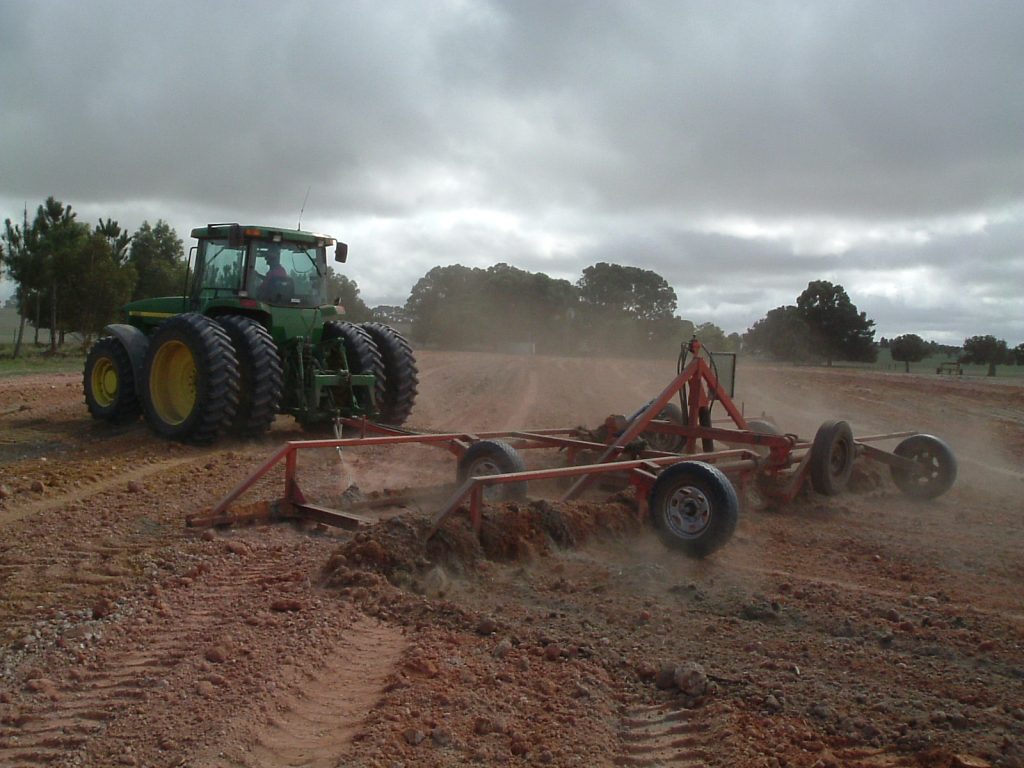
A revegetation contractor, at the sharp end, is the person who turns a restoration goal into something real on the ground. The good ones don’t just turn up with a ute full of tubestock and start digging. They read the site first — the soil, the slope, the aspect, the weed load, the rainfall pattern, what grew there originally and what’s realistically going to grow there now. Then they prepare the ground, choose and source the right species, get them in at the right time of year, and — this is the bit that matters most — they come back. Because here’s the thing almost nobody warns clients about: most revegetation projects don’t fail on planting day. They fail in the eighteen months afterwards, when the weeds move in faster than the natives, when a dry spell hits and nobody’s watering, when the rabbits find the seedlings and nobody’s checked the guards.
That’s where I’d point anyone looking to hire. Plenty of contractors are brilliant on planting day. They’ll put on a big crew, knock over thousands of plants in a week, take some lovely photos, and send you an invoice. Six months later it looks fantastic. Two years later, if nobody’s stayed on top of the weed control and replaced the failures, you’re looking at a patchy, weed-choked site that needs doing again. Weed pressure in particular is the thing clients underestimate time and again. Weeds will outcompete your new plants for water, light and space, and if the contractor’s quote didn’t include serious ongoing weed management, the low number on that quote is an illusion. You’re not buying a planting day. You’re buying establishment — plants that survive and keep going on their own — and that takes years of follow-up, not a single busy fortnight.
Which brings me to cheap quotes, because they deserve a warning of their own. A low price nearly always means something’s been left out, and what gets left out is usually the unglamorous work: the soil prep, the weed control before planting, the maintenance after. I’ve watched sites where the cut-price job had to be redone almost entirely, so the client ended up paying twice and losing a season in between. A slightly dearer contractor who does the prep properly and commits to the aftercare is, more often than not, the cheaper option by the time the dust settles. Judge the quote on what it actually covers, not the figure at the bottom.
So how do you tell whether a contractor is any good before you’ve handed over money? Experience with projects like yours is the first real signal — a steep, eroding batter and a flat, fertile paddock are completely different animals, and someone who’s only ever done easy sites will struggle the moment things get technical. Ask to see past work, and I mean actually go and look at a site they planted two or three years ago, not a photo from the week after planting. Anyone can make fresh tubestock look good. A site that’s still thriving a few years on tells you everything the brochure won’t. Ask them pointed questions too: what’s their approach to weed control, how do they handle a failed cohort, what happens if the season turns dry. The vague answers come from the ones who’ll disappear after planting. The specific, slightly weary answers come from the ones who’ve actually been through it.
Species choice is another area where good judgement quietly saves you, and poor judgement quietly costs you. The wrong mix can look perfectly respectable for the first six months and then let you down badly over five years — fast-growing cover species that give an early flush of green but don’t build toward a stable, self-sustaining community. A contractor who knows the local ground will lean hard on native species suited to your soil and climate, because locals establish better, handle the conditions, and knit into the surrounding landscape rather than sitting apart from it. They also bring back the insects, birds and animals that belong there. Someone picking off a generic plant list without understanding the site is setting you up for a result that photographs well and performs poorly. This is exactly where paying for real experience earns its keep: a seasoned operator knows which species will genuinely take, because they’ve watched the ones that don’t.
Technology has crept into this world too, and where it’s used well it helps. Drones now map and monitor large sites quickly, which makes a genuine difference on broadacre jobs where walking every hectare isn’t realistic. GIS mapping lets a contractor plan in real detail, matching species and preparation to the specifics of the ground. None of it replaces judgement on the ground — a drone can’t tell you the soil’s gone sour or the weeds are winning — but in the right hands it sharpens the work and catches problems earlier. Treat it as a useful tool, not a selling point that excuses weak fundamentals.
Then there’s the less exciting side that still has to be right: compliance, safety and sustainability. Serious projects run inside a framework of permits and regulations, and a decent contractor handles that for you rather than leaving you to discover a problem after the fact. Safety matters for the crew and anyone nearby, especially on steep or difficult sites. And sustainability isn’t just a word to sprinkle through a proposal — using local provenance seed, cutting waste, working in ways that give the restoration staying power. When all of that pulls in the same direction, you end up with a project that lasts and a contractor you’d happily hire again.
If there’s one thing to take away, it’s this: the right contractor is the difference between a site that becomes a living landscape and one that becomes an expensive disappointment. So take your time. Look past the planting-day showmanship and the tidy quote, ask the hard questions about maintenance and weed control, go and see their older sites with your own eyes, and back the person who talks honestly about follow-up rather than the one promising a quick, cheap result. Get that choice right, commit to the care in the years that follow, and the land will reward you for it. Get it wrong, and you’ll be having this same conversation again in a couple of seasons — only poorer and a little wiser.


Leave a Reply